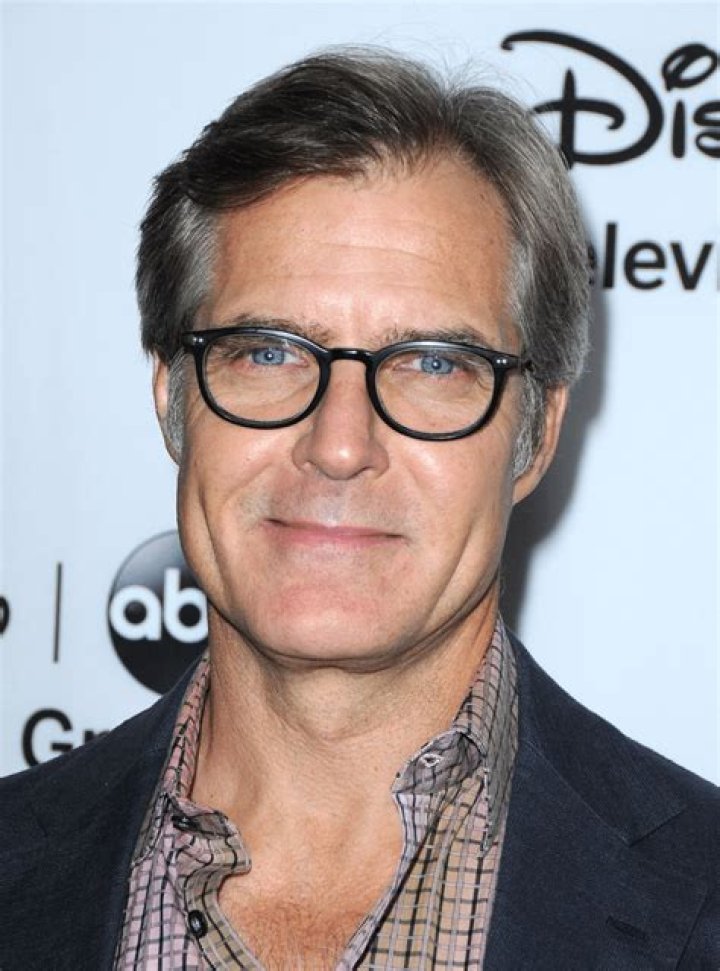
Age, Biography and Wiki
Kerry James Marshall is an American artist and painter best known for his large-scale, vibrant paintings of African-American life. He was born in Birmingham, Alabama, and raised in South Central Los Angeles. He attended Otis College of Art and Design in Los Angeles, where he earned a BFA in 1978. Marshall is widely recognized for his large-scale, vibrant paintings of African-American life. His works often feature everyday people in everyday settings, and his use of bright colors and bold lines has become his signature style. He has exhibited his work in galleries and museums around the world, including the Museum of Modern Art in New York, the Art Institute of Chicago, and the Tate Modern in London. Marshall has received numerous awards and honors, including a MacArthur Fellowship in 1997, a Guggenheim Fellowship in 1999, and the National Medal of Arts in 2018. He is currently a professor at the University of Illinois at Chicago. As of 2021, Kerry James Marshall's net worth is estimated to be roughly $2 million.
| Popular As | N/A |
| Occupation | Painter, professor |
| Age | 68 years old |
| Zodiac Sign | Libra |
| Born | 17 October, 1955 |
| Birthday | 17 October |
| Birthplace | Birmingham, Alabama, US |
| Nationality | United States |
We recommend you to check the complete list of Famous People born on 17 October. He is a member of famous with the age 68 years old group.
Kerry James Marshall Height, Weight & Measurements
At 68 years old, Kerry James Marshall height not available right now. We will update Kerry James Marshall's Height, weight, Body Measurements, Eye Color, Hair Color, Shoe & Dress size soon as possible.
| Physical Status | |
|---|---|
| Height | Not Available |
| Weight | Not Available |
| Body Measurements | Not Available |
| Eye Color | Not Available |
| Hair Color | Not Available |
Who Is Kerry James Marshall's Wife?
His wife is Cheryl Lynn Bruce
| Family | |
|---|---|
| Parents | Not Available |
| Wife | Cheryl Lynn Bruce |
| Sibling | Not Available |
| Children | Not Available |
Kerry James Marshall Net Worth
His net worth has been growing significantly in 2022-2023. So, how much is Kerry James Marshall worth at the age of 68 years old? Kerry James Marshall’s income source is mostly from being a successful . He is from United States. We have estimated Kerry James Marshall's net worth , money, salary, income, and assets.
| Net Worth in 2023 | $1 Million - $5 Million |
| Salary in 2023 | Under Review |
| Net Worth in 2022 | Pending |
| Salary in 2022 | Under Review |
| House | Not Available |
| Cars | Not Available |
| Source of Income |
Kerry James Marshall Social Network
Timeline
Kerry James Marshall grew up in Birmingham, Alabama, and then later in Los Angeles, California. He is the son of a hospital kitchen worker and a homemaker. His father's hobby was buying broken watches that he'd pick up in pawn shops for a song, figure out how to fix them with the help of books he'd find used, and resell them. Marshall was able to learn to deconstruct items that we saw as rarefied and complex to make it his own. His home in Los Angeles was near the Black Panthers’ headquarters which left him with a feeling of social responsibility and influenced directly into his artwork..
Marshall is one of the members of the contemporary artists of color such as Howardena Pindell, Charlene Teters, and Fred Wilson who often incorporated the issue of race into their work. His work is steeped in black history and black popular culture embracing blackness as a signifier of difference to critically address the marginalization of blacks in the visual sphere, utilizing a wide range of styles. His artworks are identity-based, specifically, he made black aesthetic to be visible and brought black aesthetic into the fold of the grand narrative of art. Using his own words, he uses blackness to amplify the difference as an oppositional force, both aesthetically and philosophically. One such “black” issue Marshall takes up is that of beauty. He stated that since most figures in advertising are white, he wanted to produce images of black bodies to "offset the impression that beauty is synonymous with whiteness" “Black is beautiful” was one of the Black Arts movement’s slogans to counter the prevailing view that it was inherently unattractive. Marshall directly appropriates the slogan in some of his works by utilizing language. Along with "Black is beautiful" , he wanted to create an epic narrative in his paintings in the "grand manner". His focus was to create new works of art that were not apart of the western art-historical tradition.
Most of Marshall’s painting engages allegory and symbolism. Most of his work’s subject matter relates to the iniquities of colonial regimes..Marshall is best known for his richly designed large acrylic paintings on unstretched canvas. His works combined rough-hewn realism with elements of collage, signage, with lively and highly patterned settings. His images often suggest populist banners. Viewers often will see ornate texts and figures looking directly into them. Some of his works often are under-represented black middle class and many employ pictorial strategies. His artworks are closely related to the Black Arts movement. Through exploring the theme of being black in America, Marshall’s work also explores race in context with the “Civil Rights Movement, Black Power Movement, housing projects, black beauty, and the political and social invisibility of blacks”. Marshall’s work was heavily influenced by his upbringing in Alabama in the 1950s and LA in the 1960s. His works were always based on the experience of being black in America during these time periods.
Marshall created comic strips, such as Rhythm Mastr which was a story of an African American teenager who gained superpowers through African sculptures using drum patterns. Marshall was concerned with the lack of African American heroes kids could look up to while growing up. He was one of the many African American artists who tried to incorporate themes of race and being black into his works. Some of his works, such as La Venus Negra and Voyager combine African aesthetics with Western traditions, showing the struggle of African Americans to find their place in American society. Oftentimes Marshall’s works were perceived to be full of emotion portraying what it was like being an Urban African American, displaying middle-class African American homes and families. Other projects of Marshall's, namely The Garden Project and Souvenir, demonstrate the issues of race in America from the 1960s and 1970s and onward. The Garden Project also critiques the glorified names of housing projects that conceal desperate poverty while the Lost Boys series examines young black men "lost in the ghetto, lost in public housing, lost in joblessness, and lost in literacy." Marshall's work is dynamic and consistently relevant, especially to the problem of finding an identity.
Marshall reflected, “Under Charles White’s influence I always knew that I wanted to make work that was about something: history, culture, politics, social issues. … It was just a matter of mastering the skills to actually do it.”
In 2018, two of Marshall's large masterpieces came to public attention in a clash between public art, and commerce. In May, Past Times (1997) was sold by the Metropolitan Pier and Exposition Authority to Sean Combs for a $21 million funding windfall to the public agency, after hanging in McCormick Place for many years. Past Times had played an important role during its loan to the 2016 museum exhibition. In October, Chicago Mayor Rahm Emanuel announced plans to upgrade the Legler Branch of the Chicago Public Library on the West Side. The upgrade would be financed by the auction of the library's Knowledge and Wonder (1995). After criticism, including from Marshall, the Mayor cancelled the auction.
In 2017, Marshall was commissioned by the non-profit, Murals of Acceptance to produce a public mural entitled “Rush More”. Located on the west façade of the Chicago Cultural Center, the piece was intended to be an homage to woman who have contributed to the culture of Chicago.
In 2017, he was awarded the Fifth Star Award by the City of Chicago.
In April 2016, Marshall's retrospective Mastry debuted at the Museum of Contemporary Art in Chicago as the largest retrospective to date of Marshall's art, which spanned the artist's 35-year career and included nearly 80 original pieces. In October 2016, the retrospective traveled to the Met Breuer in New York City.
The Garden Project is an insightful series of paintings, both in its shrill outcry against the false promises and despairing reality of low-income public housing and in its capacity to show the incredible ability of African Americans to find happiness and build community despite these conditions. Through this series, Marshall reveals the inherent contradictions and profound juxtapositions between the idealized promises of Public Housing Projects and the often harsh, despairing reality of those living in them. But Marshall goes beyond merely exposing the discrepancy between this ideal and its corresponding reality, as his work alludes to the sense of community and hope that African American's were able to create within the grinding conditions of low-income housing. Inspired by his former home, Nickerson Gardens, Marshall's series "The Garden Project" makes an ironic play on the connotations inherent in the word "garden." The five paintings in the series depict different public housing projects – Rockwell Gardens, Wentworth Gardens, Stateway Gardens, etc. – exploring how the almost eden-like imagery used in the names is absurd in regards to these failed projects. Executed on unstretched canvas, these massive paintings appear mural-like. Their collaged elements and, at times, rough surface treatment signify the decrepitude of public housing projects and the difficulty of life within them.
Marshall is known for large-scale paintings, sculptures, and other objects that take African-American life and history as their subject matter. In a 1998 interview with Bomb Magazine, Marshall observed,
The Souvenir series chronicles the loss dealt to American society from the deaths of leaders in politics, literature, arts, and music. Souvenir III, finished in 1998, centers on the angel that arbitrates the present with the past. She is an angel of annunciation and the caretaker of the living room's arrangements. However, in creating a new rhetoric of black people in America, he highlights their differences from conventional white power structures. There is a subtlety to the characters that compels the viewer to look deeper: these figures are directly in opposition to the abstraction black artists felt they had to incorporate in order to become mainstream artists. Marshall calls this incorporation of a strong aesthetic and political commentary a "visual authority" that commands the attention of society Within Souvenir III, the names of prominent black historical figures and the years of their deaths are featured at the top of the mural-sized painting. Thus, the theme of timelessness emerges: the viewer is in the present ruminating on the legacies of figures who are both civil rights champions and African American artists. The paintings reinforce these symbols of remembrance with the phrases "We Mourn Our Loss" and "In Memory Of". Souvenir IV (1998), likewise set in a middle-class living room based on Marshall's family's living quarters, is realism with a touch of the intangible. Through the painting the viewer is traveling to the Civil Rights era and the painting itself is a postcard that also marks the journey. The entire scene echoes Egyptian rituals of supplying the dead in the afterlife with furnishings and food. Souvenir III and IV are done in the grisaille style, an "old-master narrative painting" technique, while Souvenir I and II (1997) are done in color. As one examines the backgrounds of the Souvenir series, the viewer realizes the lushness of the settings even within the monochromatic natures of III and IV. A Marshall hallmark is the stamping repeated through a painting, seen here as angel wings surrounding the black leaders, and floral backgrounds, seen here as glittered ornamentation.
Marshall's first major solo exhibition, which traveled throughout the country, was organized at the Renaissance Society of the University of Chicago in 1998. His work has been exhibited in many American and international exhibitions, including the Venice Biennale (2003) and the Documenta (1997 and 2007).
Marshall was the recipient of a MacArthur Foundation "genius grant" in 1997.
Marshall's Many Mansions, from 1994, exposes the contradiction between the name "Stateway Gardens", and the reality of life there. There is a deceitful cheerfulness permeating the piece, as the landscape is illustrated in full bloom. The exaggeratedly black figures are planting blossoming flowers, the trees are pristinely cut, and everything appears bountiful. But Marshall's black figures, as Michael Kimmelman notes in his New York Times piece, are "stiff and stylized: almost stereotypes". They epitomize the impoverished black man living in public housing and unlike the landscape that surrounds them, they are not cheerful. One stares condemningly at the viewer, while the other two avert their gaze, all devoid of happiness. The buildings they live in appear as cardboard backdrops, calling attention to the falsity of the situation. Truth is not found in the beautiful utopianism of the scenery or flowers, but rather in the artificiality of the buildings and the stereotypical, damning images of the men who live in them.
One of his most famous series of works The Lost Boys (1993-1995) displays the lives of and issues many African Americans faced. The series of portraits was of young African American boys from the shoulder up, with very dark skin tones, which contrasted with extreme whiteness of the subject's eyes which was common in Marshall’s works. The portraits also featured almost completely white imagery, with white orbs, flowers, and areas in the background to create even more contrast. The artist explained that this series of portraits was to show these young boys loss of innocence at an early age and being a victim to ghettos and public housing.
Marshall based several of his pieces in the early 1990s on actual events in American history. One such painting, Voyager, painted in 1992, has special pertinence in a discussion of race issues in the United States because Marshall based it on a "luxury schooner ... secretly outfitted to carry African slaves". Symbols of this representation abound, from the two black figures in the boat and the flowers draped around the woman's neck to the contrast between the light and airy clouds and the darkness of the upper background. A skull lies in the water, just beneath the ship, hinting at the doomed future of the Africans, and the unknown woman has an expression of uneasiness. He thus brings to the forefront the irony of a ship with a beautiful, high class appearance and a dark secret purpose, forcing people to think about something they would rather forget.
His time spent in the Watts neighborhood of Los Angeles, California where the Black Power and Civil Rights movements had a significant impact on his paintings. Strongly influenced by his experiences as a young man, he developed a signature style during his early years as an artist that involved the use of extremely dark, essentially black figures. These images represent his perspective of African Americans, specifically black men with separate and distinct inner and outer appearances. At the same time, they confront racial stereotypes within contemporary American society. This common theme appeared continuously in his work throughout the subsequent decades, especially in the 1980s and 1990s and still appears in his most recent works.
Kerry James Marshall (born October 17, 1955) is an American artist born in Birmingham, Alabama. He grew up in South Central Los Angeles and now lives in Chicago, Illinois, where he previously taught at the School of Art and Design at the University of Illinois at Chicago. He is a 1978 graduate of Otis College of Art and Design. An exhibition of his work, Kerry James Marshall: Mastry, was assembled by the Museum of Contemporary Art in 2016.