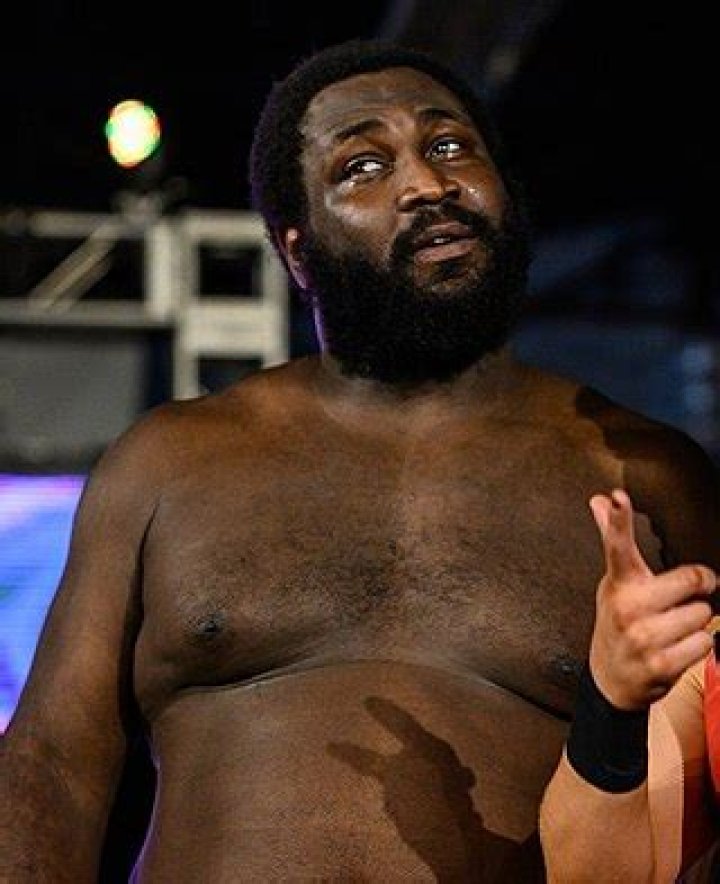
Age, Biography and Wiki
Brandon Hein was born on 17 February, 1977. Discover Brandon Hein's Biography, Age, Height, Physical Stats, Dating/Affairs, Family and career updates. Learn How rich is He in this year and how He spends money? Also learn how He earned most of networth at the age of 47 years old?
| Popular As | N/A |
| Occupation | N/A |
| Age | 47 years old |
| Zodiac Sign | Aquarius |
| Born | 17 February, 1977 |
| Birthday | 17 February |
| Birthplace | N/A |
| Nationality |
We recommend you to check the complete list of Famous People born on 17 February. He is a member of famous with the age 47 years old group.
Brandon Hein Height, Weight & Measurements
At 47 years old, Brandon Hein height not available right now. We will update Brandon Hein's Height, weight, Body Measurements, Eye Color, Hair Color, Shoe & Dress size soon as possible.
| Physical Status | |
|---|---|
| Height | Not Available |
| Weight | Not Available |
| Body Measurements | Not Available |
| Eye Color | Not Available |
| Hair Color | Not Available |
Dating & Relationship status
He is currently single. He is not dating anyone. We don't have much information about He's past relationship and any previous engaged. According to our Database, He has no children.
| Family | |
|---|---|
| Parents | Not Available |
| Wife | Not Available |
| Sibling | Not Available |
| Children | Not Available |
Brandon Hein Net Worth
His net worth has been growing significantly in 2022-2023. So, how much is Brandon Hein worth at the age of 47 years old? Brandon Hein’s income source is mostly from being a successful . He is from . We have estimated Brandon Hein's net worth , money, salary, income, and assets.
| Net Worth in 2023 | $1 Million - $5 Million |
| Salary in 2023 | Under Review |
| Net Worth in 2022 | Pending |
| Salary in 2022 | Under Review |
| House | Not Available |
| Cars | Not Available |
| Source of Income |
Brandon Hein Social Network
Timeline
In October 2019, Hein was granted parole. He is expected to be released from prison by summer 2020.
Appellants Micah, Jason and Hein then verbally and physically assaulted McLoren. The intensity and violence of the battle escalated. McLoren held Micah face down on a bed and elbowed him about the back and neck. Jason attempted to pull McLoren off of Micah. McLoren kicked Jason in the face. McLoren then heard appellant Jason say, “Let’s get this fucker.” While being held in a headlock, McLoren twice felt sharp, debilitating, pulsating sensations, which later proved to be multiple stab wounds. Jason admitted stabbing McLoren.
Both McLoren and Farris broke away from the fight and ran to McLoren’s house. They each reported to McLoren’s mother that “. . . they (appellants) came to get our stuff . . .” and had stabbed them. Mrs. McLoren saw a stab wound in the center of Farris’ chest.
Witnesses observed appellants together leaving the McLoren yard, being met by the Velardo pickup truck and driving away in Velardo’s pickup truck. A witness testified that he observed the four appellants on the street as they left the McLoren backyard apparently talking among themselves and smiling.
As of August 16, 2018, a bill which would reduce the broad scope allowed in charging "special circumstances" has been approved by the California Senate and awaits action by the Assembly. The bill would restrict the charging of special circumstances to only those who actually commit murder or who are directly involved, and would require re-sentencing of offenders such as Hein.
On May 2, 2017, a book chronicling the Farris case, "One Cut" by Eve Porinchak, was released by Simon & Schuster.
Brandon Hein, Micah Holland, and Jason Holland remain in prison. Their legal appeals have been exhausted. Miliotti appeared before the Board of Parole Hearings on April 28, 2011. The board found that Miliotti was "not yet suitable for parole and would pose an unreasonable risk of danger or a threat to public safety if released from prison," and gave him a ten-year denial. However, under Marsy's Law, a life inmate who is denied parole may, in three year intervals, request that his or her hearing be moved to an earlier date. Miliotti filed a petition to advance which was approved and his next hearing was advanced from ten to seven years. His "Subsequent Parole Consideration Hearing" took place on March 8, 2018. The parole board found that, "Mr. Miliotti does not pose an unreasonable risk of danger to society or threat to public safety and is therefore suitable for parole." On December 24, 2018, Governor Edmund G. Brown, Jr. commuted Jason Holland's sentence, from life without the possibility of parole plus eight years, to 30 years to life. Micah Holland appeared before the Board of Parole Hearings on March 13, 2019. He was denied parole and given a seven year denial.
On April 12, 2010 the appeals were denied, with the court acknowledging some instances of prosecutorial misconduct but saying their combined effect, along with the nondisclosure of McLoren's immunity, was not sufficient to render the trial fundamentally unfair.
On May 26, 2010 attorneys for Hein, Miliotti, and Jason Holland filed a "Joint Petition for Rehearing En Banc." Attorneys for Micah Holland filed a separate "Petition for Rehearing En Banc." In the petitions, the attorneys argue that the April 12 opinion by the three-judge panel "conflicts with a well-settled body of law within the Ninth Circuit," and that "En banc review is necessary to secure and maintain the uniformity of this Court’s decisions."
On July 16, 2010, the three-judge panel of the Ninth Circuit Court issued an order stating that "The full court has been advised of the petitions for rehearing en banc and no judge has requested a vote on whether to rehear the matter en banc. The petitions for panel rehearing and the petitions for rehearing en banc are denied."
On November 15, 2010, attorneys for the four petitioners filed a petition for a writ of certiorari with the Supreme Court of the United States. The petition was denied on April 18, 2011.
On October 7, 2009 the appeals were heard by a three-judge panel of the United States Court of Appeals for the Ninth Circuit. Attorneys for the four alleged false testimony by McLoren and misconduct by the prosecution, including failure to disclose evidence favorable to the defense.
On March 17, 2009, Hein's sentence was commuted by Governor Schwarzenegger, from life without possibility of parole plus four years, to 29 years to life with the possibility of parole. Hein's "Initial Suitability Hearing" is scheduled for October 30, 2019.
Following exhaustion of their appeals in state court, Hein, Miliotti, Micah and Jason Holland filed individual Petition for Writ of Habeas Corpus in the United States District Court for the Central District of California in May and July 2004. The petitions raised identical, overlapping, and separate claims: Brady violations, prosecutorial misconduct, ineffective assistance of counsel, improper exclusion or admission of evidence, juror misconduct, judicial misconduct, cruel and unusual punishment, and arbitrary and capricious sentence reduction. On April 3, 2007, the United States Magistrate Judge assigned to the case filed a joint Report and Recommendation, recommending that the petitions be denied. All four appellants filed objections to the Magistrate's report, but the United States District Judge adopted the Report and Recommendation without modification. Each appellant then requested a Certificate of Appealability to the United States Court of Appeals for the Ninth Circuit, which were all granted in whole or in part by the District Court. On January 17, 2008, the Ninth Circuit Court granted a motion to consolidate the appeals of the four appellants.
In 2005 Gazecki was a guest speaker at California State University Los Angeles, where his film was shown to Soren Kerk's sociology class with the question in mind, "What is Justice?"
A petition for a writ of habeas corpus with the California Supreme Court was filed on September 23, 2002, which was summarily denied on May 12, 2004.
The following description of the fight and stabbing is from the "Summary of Facts and Proceedings" in the January 29, 2001 California Court of Appeal findings. Note that the term "appellants" excludes Christopher Velardo, 17, owner of the pickup truck, who remained in the truck throughout the incident and was tried separately.
On 29 January 2001 the California Court of Appeal ruled that "In order to warrant reversal, it must be determined that the alleged misconduct has prejudiced appellants’ right to a fair trial. In this case, the evidence against appellants was overwhelming." The Court affirmed the convictions and sentencing of Jason Holland, Brandon Hein and Micah Holland. The special circumstance finding against Anthony Miliotti, who stood and watched, was struck from the record and his crime reduced to second-degree murder, and his case sent back to the trial court for resentencing, resulting in a new sentence of nineteen years to life.
The California Supreme Court denied petitions for review on April 25, 2001.
Hein filed a petition for a writ of certiorari with the United States Supreme Court, which was denied on October 1, 2001.
Christopher Velardo pleaded guilty separately to voluntary manslaughter and conspiracy to commit robbery and was sentenced to eleven years. Velardo was released from prison in 2000.
On May 28, 1996 the jury found the four defendants guilty of burglary, attempted robbery, and murder committed during the course of a burglary and an attempted robbery, that is, felony murder. In addition, Jason Holland was convicted of assault with a deadly weapon. The jury also found the allegations of special circumstances to be true, and found the murder, burglary and attempted robbery to be of the first degree.
On May 22, 1995, five youths ranging in age from 15 to 18 were drinking alcohol and cruising in a pickup truck around Agoura Hills, a suburban town in Los Angeles County, California. Less than an hour before the stabbing, one of the five, Jason Holland, 18, grabbed a wallet from an unlocked vehicle in the parking lot of a public park, an act witnessed by the wallet's owner, a mother playing in the park with her children. Shortly thereafter, she recognized the truck and confronted the five, demanding and receiving her wallet back in the face of their threats and intimidation. This theft and intimidation was used to support the prosecution's contention that the five were still acting in concert at the time of the murder.
Brandon Wade Hein (born February 17, 1977) was sentenced to life imprisonment without possibility of parole for his involvement in the 1995 stabbing murder of 16-year-old Jimmy Farris, the son of a Los Angeles Police Department officer. Hein and two other youths who were present when the murder took place, as well as the actual killer, and were convicted under the felony murder rule because the murder was committed during the course of a felony – the attempted robbery of marijuana kept for sale by Farris's friend, Michael McLoren. Under the felony murder rule, any participant in a felony is criminally responsible for any death that occurs during its commission. In 2009, Hein's life sentence was commuted to 29 years to life.